Understanding the Cute Sitting Baby Fox Cartoon Illustration and What Sets It Apart
When you browse through digital illustration marketplaces, you will encounter thousands of animal characters, each claiming to be the perfect visual asset for your project. Among these, the cute sitting baby fox cartoon has gained steady attention from designers, educators, and small business owners. But beyond the appealing pose and expressive eyes, there is a practical question worth exploring: what actually makes one vector illustration set a better fit for your workflow than another, and where does this particular fox design fit into the broader landscape of available options?
This article walks through the characteristics, practical strengths, and realistic limitations of a well-organized cute sitting baby fox cartoon EPS illustration set. Rather than simply praising the artwork, we will look at how it compares with alternative formats, styles, and resource types, so you can decide whether it aligns with your specific creative or commercial needs.
What Defines a Cute Sitting Baby Fox Cartoon Illustration
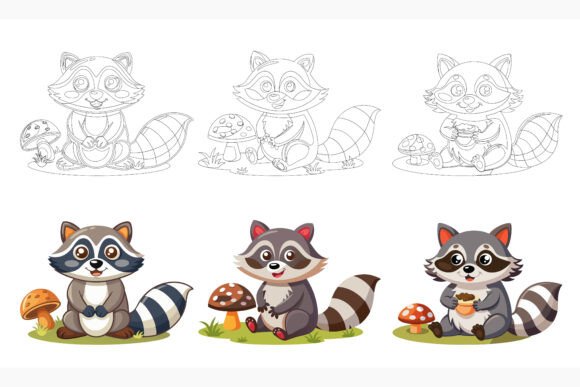
At first glance, a cute sitting baby fox cartoon might seem like a straightforward graphic of a small fox in a resting pose. In practice, the most usable versions go far beyond a single flat image. They typically arrive as bundled sets containing multiple file formats and at least three visual variations. The seated posture itself carries a particular visual language, it suggests calmness, approachability, and a touch of whimsy, making the character suitable for children's materials, greeting cards, branding accents, and user interface elements.
The distinctiveness of a well-crafted version comes from how the lines are shaped, how the tail wraps around the body, the proportion of the head to the torso, and the subtle details in the ears and facial expression. These design choices determine whether the fox reads as genuinely endearing or falls into the category of generic clip art. The difference often lies in the illustrator's attention to consistency across variations and the cleanliness of anchor points in the vector file, details that become visible only when you zoom in or attempt to customize the artwork.
Vector Format Advantages Compared to Raster Alternatives
One of the most meaningful distinctions in digital illustration is the gap between raster and vector formats. The cute sitting baby fox cartoon discussed here comes in AI and EPS formats, both industry-standard vector types, alongside a JPG preview. Understanding what this means in practical terms helps clarify where this kind of resource excels and where it might not be necessary.
Raster images, such as standard JPGs or PNGs, are built from fixed grids of pixels. When you scale them up beyond their original dimensions, they soften and lose clarity. Vector files, by contrast, use mathematical paths that remain sharp at any size. This means a single cute sitting baby fox cartoon EPS file can appear crisp on a business card, a website header, a poster, or even a large-format banner without any degradation. For anyone who produces work across multiple media types, this scalability eliminates the need to purchase or create separate versions for different dimensions.
However, vector artwork also demands compatible editing software. Adobe Illustrator remains the primary tool, though alternatives like Affinity Designer, CorelDRAW, and certain open-source editors can open EPS files with varying levels of fidelity. If your workflow relies exclusively on raster-based tools like Photoshop or Canva without vector support, you may find yourself limited to using the JPG versions, which forfeits the scaling and customization advantages.
Comparing AI and EPS Formats for Different User Scenarios
Within the vector category, both AI (Adobe Illustrator native) and EPS (Encapsulated PostScript) formats serve distinct purposes. The AI format retains full editability within Adobe's ecosystem, preserving layers, swatches, and effects in their original state. EPS files, on the other hand, offer broader compatibility across different design applications and operating systems, including both Mac and Windows environments. A set that includes both provides flexibility: you can work natively in Illustrator for deep customization or share the EPS file with collaborators who use different software.
For users on Mac, the AI and EPS combination works smoothly within the Adobe suite and many Mac-native design tools. Windows users benefit similarly, with the added reassurance that EPS files have long been a reliable cross-platform exchange format. The inclusion of both signals a thoughtful preparation of the asset, not just a single export destined for one audience segment.
Organized File Structure and Its Impact on Workflow
One underappreciated aspect of any digital illustration purchase is how the files are organized once you unzip the download. A neatly structured file and layer hierarchy inside the AI document saves measurable time. When you open the cute sitting baby fox cartoon file and find clearly labeled layers, such as "body," "tail," "eyes," "nose," "shadows," and "background," you can isolate and edit specific parts without hunting through dozens of unnamed paths. This level of organization matters most when you need to change colors, resize individual elements, or repurpose parts of the illustration for a different composition.
Poorly organized vector files, by comparison, often arrive with flattened or grouped elements that resist easy editing. You may spend more time ungrouping and reorganizing than actually designing. The difference between a well-layered file and a messy one can turn a five-minute color adjustment into an hour of frustration. For professionals who bill by the hour or manage multiple projects, this efficiency factor carries real weight.
Customization Potential and Design Flexibility
The ability to edit, recolor, and modify an illustration freely separates a truly useful asset from a decorative but rigid image. With vector-based illustrations, you can change the fur color from the classic orange-red to a stylized teal or monochrome palette, adjust line weights, and even repurpose the sitting pose into a standing or jumping fox by manipulating anchor points, though the latter requires more advanced skills.
Designers working on brand-specific projects often need to align character illustrations with an existing color scheme. A cute sitting baby fox cartoon released with editable vector layers supports this cleanly. You can apply global color changes across the entire set of variations in minutes. This flexibility compares favorably against alternatives like stock photos or pre-rendered PNG illustrations, where color adjustments are limited to overlay effects and filters that rarely look as clean or intentional.
Yet customization has its boundaries. Heavily stylized illustrations with complex gradients, meshes, or textured brushes may not edit as smoothly as flat-design vectors. If the fox illustration uses flat or gently shaded vector shapes, the editing process remains straightforward. If it relies on intricate raster-like effects embedded within the vector file, modifying colors cleanly becomes more challenging. Checking the preview images for visual clues about the illustration style helps set accurate expectations.
Three Variations and Consistency Across the Set
Receiving three variations of the same character amplifies its usefulness. These might include different facial expressions, slight pose adjustments, or accessory changes that keep the core design recognizable while offering variety. For a children's book layout, you could use one variation on the cover, another on an interior spread, and the third on promotional materials, all while maintaining visual coherence.
Consistency in details is what separates a professionally crafted set from a collection of loosely related images. The line quality, shading style, highlight placement, and proportional relationships should remain uniform across all variations. When one version has slightly thicker outlines or a different eye shape, the set feels disjointed, and the viewer may sense something is off even without consciously identifying the issue. A high-quality cute sitting baby fox cartoon set maintains perfection in these subtle details, which preserves a polished look across all applications.
Practical Use Cases Across Print, Web, and App Environments
The stated versatility of this type of illustration spans print, web, symbols, apps, and infographics. Let us examine each context more concretely:
- Print: The vector format ensures crisp output at 300 DPI and above for flyers, posters, packaging, stickers, and book illustrations. The fox character works especially well for nursery decor, party invitations, and educational worksheets.
- Web: Exported as SVG or optimized PNG, the illustration integrates into blog graphics, email headers, social media posts, and website hero sections. The scalable nature means one source file serves both retina displays and standard screens.
- Apps: Game developers and UI designers can use the character as an avatar, onboarding mascot, achievement badge, or loading screen graphic. The clean vector paths translate well into the simplified visual language common in mobile interfaces.
- Infographics: A friendly animal character can humanize data presentations, drawing the viewer's eye toward key statistics or section headers without feeling overly corporate.
When This Illustration Set Tends to Be the Right Choice
Based on the available features, a cute sitting baby fox cartoon EPS set like this tends to align well with certain user profiles and project types. If you need a ready-made character that you can quickly adapt to your brand, if you produce work across multiple media formats, and if you value organized, editor-friendly files over cheaper but less flexible downloads, then this resource likely matches your criteria.
Small business owners creating their own marketing materials, educators developing classroom resources, independent game developers, and freelance designers juggling multiple client projects may all find that the combination of vector scalability, three variations, and cross-platform compatibility addresses their core needs without pushing them into unnecessary complexity or cost.
Situations Where Alternatives Might Serve You Better
No single illustration set fits every situation. If your project requires a highly specific fox breed depiction, a realistic animal study rather than a cartoon style, or a character in an action pose rather than a seated posture, this resource may not fulfill your requirements. Similarly, if you work exclusively in raster-based software and have no intention of learning vector editing, you might find greater value in a large PNG pack with higher resolution options and transparent backgrounds rather than purchasing vector files you cannot fully use.
Projects with tight stylistic constraints, such as those requiring a specific animation-ready rig or a character sheet with walk cycles and multiple angles, will need resources built specifically for those purposes. The sitting baby fox illustration serves illustration and graphic design needs admirably but was not designed as an animation asset or a comprehensive character system. Recognizing these boundaries prevents mismatched expectations.
Budget may also influence your decision. Higher-quality vector sets with organized layers and multiple variations often sit at a higher price point than simpler clip art bundles. If you only need a single, one-time-use image for a low-resolution web graphic, a less expensive or free alternative with fewer features might be the more practical choice.
Evaluating Quality Before You Commit
When considering any illustration purchase, including a cute sitting baby fox cartoon set, examining the available preview images carefully provides valuable clues. Look at the edges of the shapes, they should appear smooth, not jagged or pixelated, even at larger preview sizes. Observe whether the color palette feels harmonious and whether the highlights and shadows remain consistent across all displayed variations. If the product listing mentions organized layers and editable files, experienced designers know that this signals a level of professionalism worth paying attention to.
Reading user reviews and examining any sample images at full resolution can also reveal whether the illustration meets the claims made in its description. A file that is genuinely well-structured, consistently detailed, and easy to edit across both Mac and Windows environments will typically earn feedback that mentions these practical benefits explicitly.
Making a Confident, Informed Decision
Choosing a vector illustration involves balancing aesthetic appeal, technical quality, and practical usability. The cute sitting baby fox cartoon format examined here, with its AI and EPS files, three variations, cross-platform design, and organized layer structure, represents a category of digital asset that prioritizes editability and professional output. It stands apart from simpler clip art through its attention to detail and consistency, while also differing from specialized animation or 3D assets in its focused scope.
By understanding what vector formats offer, how file organization affects your daily workflow, where customization possibilities begin and end, and which use cases this style naturally supports, you can evaluate whether this illustration set fits your project or whether an alternative direction would serve you better. The goal is never to chase every available option, but to find the resource that lets you work efficiently and produce results you feel genuinely satisfied sharing, printing, or publishing.