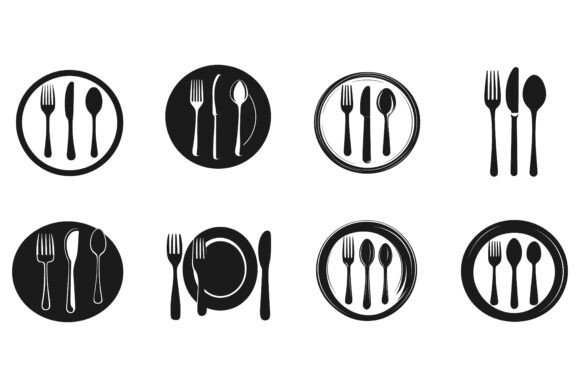
Spoon, Fork, and Knife Icon Sets: Your Complete Guide to Premium AI & EPS Illustration Collections
In a world where visual communication defines user experience, the smallest design elements often carry the most weight. Among these, cutlery icons—spoon, fork, and knife symbols—have become indispensable tools for designers working across food industry branding, restaurant applications, recipe platforms, and hospitality interfaces. But not all icon sets are created equal. When you encounter a carefully crafted AI and EPS illustration collection, something meaningful shifts in your workflow. Suddenly, you hold assets that are not just visually appealing but structurally robust, endlessly editable, and ready for professional deployment across any medium. This article explores what makes a premium spoon, fork, and knife icon set truly special, why file formats matter, and how these collections can transform your creative projects from ordinary to extraordinary.
Understanding the Role of Cutlery Icons in Modern Design
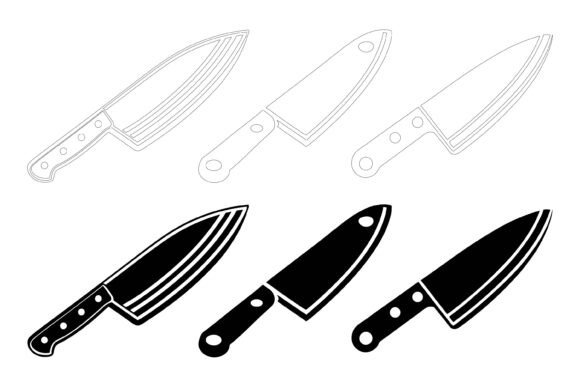
At first glance, spoon, fork, and knife icons might seem like simple, utilitarian symbols. But in practice, they communicate far more than their literal meanings. A fork icon can signal a restaurant section on a website, a dining option in a mobile app, or a food category in an infographic. A spoon might represent dessert menus, soup bars, or baby food products. A knife, meanwhile, often pairs with steakhouse branding, culinary event promotions, or gourmet food packaging.
The universality of these symbols makes them essential. They transcend language barriers, offering immediate recognition to users regardless of their cultural background or native tongue. This is precisely why designers, marketers, and business owners seek out high-quality icon sets that maintain clarity, consistency, and aesthetic charm across every use case. When you find a collection that offers all three cutlery icons in a cohesive style, you unlock a visual language that can unify an entire brand experience—from digital menus to printed flyers, from app navigation bars to large-scale signage.
What Are AI and EPS Files, and Why Do They Matter?
Before diving deeper into the specifics of cutlery icon collections, it is worth pausing to understand the file formats that define professional design work. Many beginners encounter icons in PNG or JPEG formats—raster images made up of fixed pixels. While these work for simple, one-time uses, they fall short when you need to scale an icon to a billboard size or recolor it to match a specific brand palette. Enter AI and EPS files.
AI stands for Adobe Illustrator, a native vector format that preserves all editable layers, paths, colors, and shapes. When you open an AI file in Adobe Illustrator or a compatible vector editing program, you gain complete control over every anchor point and curve. You can enlarge the icon to any size without losing sharpness, change individual colors with a few clicks, and even restructure the entire composition if needed.
EPS, or Encapsulated PostScript, is another vector format known for its broad compatibility. EPS files work seamlessly not only in Adobe Illustrator but also in CorelDRAW, Affinity Designer, and even some older design software. They retain scalability and editability while offering greater flexibility for users who might not have access to the latest Adobe Creative Cloud suite. Many professional icon collections include both AI and EPS files precisely to cater to a diverse range of designers and workflows.
The Distinct Advantages of a Premium Spoon, Fork, and Knife Icon Set
When you browse marketplaces for cutlery icons, you might wonder why some collections stand out while others feel generic or limiting. The difference often lies in subtle but crucial details that separate premium assets from amateur offerings. Let us explore what elevates a truly exceptional icon set.
Neat Organization of Files and Layers
One hallmark of a professional illustration collection is its internal structure. Premium sets arrive with neatly organized files and a clear layer structure that saves you from the frustration of hunting through unnamed layers and chaotic groupings. Each spoon, fork, and knife icon might reside on its own clearly labeled layer or within a logically named group. This foresight allows you to isolate individual icons instantly, export them separately, or apply global adjustments without affecting unintended elements. Organization may seem like a behind-the-scenes detail, but it directly impacts your efficiency, especially during tight deadlines or collaborative projects where multiple team members need to navigate the same file.
Perfection in Details and Consistency
Look closely at a masterfully designed cutlery icon, and you will notice the care poured into every curve, every handle proportion, every tine of the fork. Perfection in details and consistency means that all three icons—spoon, fork, and knife—share the same stroke widths, corner radii, and visual weight. This harmony ensures that when you place them side by side in a navigation menu or an infographic layout, they feel like siblings rather than distant relatives. Inconsistent icons can subtly undermine a brand’s credibility, making the design feel haphazard. Consistent icons, by contrast, project professionalism and intentionality.
Thoughtful Design for Mac and Windows Users
Another practical advantage of a well-produced icon collection is cross-platform compatibility. Whether you work on a Mac or a Windows machine, the files should open correctly, display fonts and shapes accurately, and allow smooth editing. This inclusivity acknowledges the reality of modern creative teams, where colleagues may operate on different operating systems. A collection explicitly designed for Mac and Windows users eliminates technical hiccups and ensures that the creative process remains uninterrupted regardless of your hardware preferences.
Practical Applications Across Print, Web, Apps, and Infographics
The versatility of a high-quality spoon, fork, and knife icon set extends far beyond a single type of project. Because these icons arrive in scalable vector formats, they adapt effortlessly to an extraordinary range of mediums.
Print Design
For printed materials such as restaurant menus, food festival banners, cookbook illustrations, or product packaging, vector icons shine. You can scale a fork icon to occupy an entire page without encountering pixelation or blurriness. The crisp lines and smooth curves maintain their integrity at any dimension, from a tiny spot illustration beside a menu item to a large decorative element on a storefront window graphic.
Web and Digital Interfaces
On websites and web applications, cutlery icons serve as intuitive visual cues. They guide users toward food-related sections, differentiate menu categories, or mark dietary options. Because the icons are editable, you can match their colors precisely to your website’s palette, adjust their size to fit responsive breakpoints, and export them in optimized formats such as SVG for lightning-fast loading times. Accessibility also improves when icons are clean and unmistakable, helping all users navigate digital spaces with confidence.
Mobile Apps and Symbols
In the realm of mobile app design, clarity at small sizes becomes paramount. A fork icon that looks detailed and beautiful at 24 by 24 pixels requires deliberate simplification and balanced proportions. Premium icon sets are crafted with these constraints in mind, ensuring legibility even at the smallest scale. Whether you are designing a food delivery app, a restaurant loyalty program interface, or a kitchen timer widget, your icons will remain crisp and recognizable.
Infographics and Data Visualization
Infographics rely on visual storytelling to convey complex information quickly. Spoon, fork, and knife icons can represent dietary statistics, global food consumption patterns, restaurant industry trends, or nutritional breakdowns. Because the icons are vector-based and fully editable, you can color-code them, overlay them onto charts, or combine them with text and data points seamlessly. The result is an infographic that feels polished and engaging rather than cluttered or amateurish.
How Easy Editing Transforms Your Creative Freedom
One of the most compelling features of a premium AI and EPS icon collection is the freedom it grants you to edit, change colors, and modify icons according to your needs. Imagine you receive a spoon icon in a shade of silver that clashes with your brand’s warm gold accent colors. With a raster image, you might spend hours painstakingly selecting pixels and adjusting hues, often with mediocre results. With a vector file, you simply select the shape, pick a new fill color, and the transformation is instantaneous and flawless.
Beyond simple recoloring, you can also reshape elements. Perhaps you want the fork to have slightly longer tines, or the knife handle to feature a more curved ergonomic profile. In Adobe Illustrator or a similar vector editor, you can grab individual anchor points and manipulate them with precision. This adaptability means you are not locked into someone else’s vision; you become a collaborator in the design, tailoring the artwork to your exact specifications.
Custom modifications also extend to combining icons with other design elements. You might overlay a spoon with a leaf to create a symbol for organic food, or pair a fork with a clock to represent dining hours. The possibilities multiply when your foundation is flexible. This creative agility can differentiate your brand from competitors who rely on off-the-shelf icons that everyone else uses without alteration.
Common Misunderstandings About Vector Icon Sets
Some designers, especially those new to the field, assume that all vector icons are essentially interchangeable. This misconception can lead to disappointing outcomes. A poorly constructed icon might contain unnecessary anchor points that cause odd distortions when scaled, or it might rely on raster effects embedded within a vector file, defeating the purpose of scalability. Another common misunderstanding involves the belief that EPS files are obsolete. While AI files offer deeper integration with Adobe’s ecosystem, EPS remains a valuable universal format that ensures compatibility across a wider range of software, including legacy programs still used in many print shops and design studios.
Additionally, some users expect that editing vector icons requires advanced technical skills. In reality, basic modifications such as color changes, resizing, and simple path adjustments are remarkably straightforward. With a gentle learning curve and a willingness to experiment, even beginners can harness the full power of a well-organized AI or EPS file.
Why This Collection Stands Out in a Crowded Marketplace
With countless icon sets available online, it is worth asking what makes a particular spoon, fork, and knife collection noteworthy. The answer lies in a combination of attributes: meticulous organization of files and layers, uncompromising attention to detail and consistency, genuine cross-platform usability for both Mac and Windows, and broad suitability for print, web, apps, and infographics. When a collection brings all of these strengths together, it becomes more than a set of images—it becomes a reliable resource that supports your creative work at every stage.
The inclusion of both AI and EPS formats alongside a convenient JPG preview ensures that you can quickly browse the icons, share mockups with clients, and dive into deep editing whenever necessary. The JPG files serve as handy references, while the vector files remain your primary tools for production-ready output. This thoughtful packaging reflects an understanding of real-world design workflows, where speed, clarity, and flexibility coexist.
Bringing It All Together: Your Next Step
Whether you are a seasoned graphic designer, a small business owner refreshing your café’s visual identity, a web developer building a recipe platform, or an educator creating engaging classroom materials, the value of a dependable spoon, fork, and knife icon set cannot be overstated. The right collection saves you hours of manual tracing, eliminates guesswork around scalability, and provides a cohesive visual language that elevates every project it touches.
Take a moment to consider the projects on your horizon. A menu redesign that needs elegant, consistent cutlery symbols. A mobile app interface that requires intuitive dining icons. An infographic about global cuisine that demands clear, attractive visual markers. In each scenario, having a professionally crafted AI and EPS illustration set at your fingertips transforms daunting tasks into enjoyable creative exercises. You gain the ability to iterate quickly, present polished concepts to stakeholders, and deliver final work that meets the highest standards of quality.
So what are you waiting for? Embrace the opportunity to work with icons that are neatly organized, perfectly detailed, and effortlessly editable. Buy now and start using this awesome illustration collection to enhance your designs with the professional polish they deserve. Your spoon, fork, and knife icons are ready to be customized, scaled, and seamlessly integrated into every creative endeavor you can imagine.