Strawberry Sweet Fruit Vector Illustrations: What Designers Should Evaluate Before Downloading
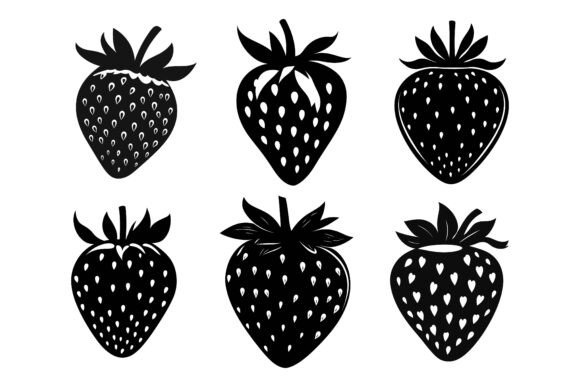
Vector illustration packs have become a go‑to resource for designers, marketers, and content creators who need high‑quality visuals without commissioning custom artwork from scratch. Among the countless themed collections available, sets built around familiar, appealing subjects — like the Strawberry Sweet Fruit illustration collection — tend to attract steady interest. These packs typically feature stylized or semi‑realistic strawberry imagery, bundled with complementary elements such as leaves, blossoms, slices, or pattern arrangements. The file format support — including AI, EPS, and JPG — suggests the collection is built for cross‑platform workflows, covering both vector editing and quick‑placement raster needs. But before reaching for the download button, it helps to take a closer look at what these collections actually offer, where they add genuine value, and where their limitations might influence your decision.
What You Actually Get in a Strawberry Sweet Fruit Illustration Set
When providers describe an illustration set as being part of a "Special AI EPS Collection," the emphasis typically falls on editability and format breadth. The Strawberry Sweet Fruit bundle referred to in product listings usually includes source files saved in Adobe Illustrator’s native AI format, the widely interchangeable EPS format, and at least one high‑resolution JPG preview or flattened version. This combination serves distinct purposes. AI and EPS files allow full access to vector paths, anchor points, gradients, and layer structures. The JPG acts as a quick‑reference raster file you can drag into presentations, mockups, or social media drafts without launching a vector editor.
What makes this practical is the folder and layer organization mentioned in the product details. Well‑structured files mean you spend less time hunting for individual strawberry elements, adjusting grouped objects, or deciphering poorly named layers. In a Strawberry Sweet Fruit illustration pack where stems, seeds, highlights, and shadow shapes are logically separated, recoloring or restyling becomes dramatically faster. For print designers preparing packaging, menu designs, or fruit‑themed branding assets, that structural clarity carries real efficiency gains.
Reasons Designers Gravitate Toward Fruit‑Themed Vector Collections
Strawberry imagery is remarkably versatile. It appears in food and beverage branding, health and wellness content, seasonal spring and summer campaigns, children’s educational materials, and lifestyle product packaging. The Strawberry Sweet Fruit theme connects with audiences on an emotional level — strawberries evoke freshness, natural sweetness, and familiarity. Having a ready‑made set of coordinated fruit illustrations eliminates the repetitive work of redrawing familiar shapes every time a project calls for berry visuals.
Beyond simple convenience, vector consistency is a core reason someone would consider a themed pack. If you build a visual identity around fruit motifs, a single collection can provide uniform stroke weights, shading styles, and color palettes across all strawberry assets. This visual coherence is difficult to achieve when sourcing individual icons or illustrations from disconnected libraries. The Strawberry Sweet Fruit concept, executed as a unified set, reduces the risk of mismatched styles appearing across a brand’s touchpoints.
Evaluating Compatibility Across Mac and Windows Environments
One feature explicitly highlighted in product specifications is support for both Mac and Windows users. In practice, this mainly refers to the universal nature of the AI, EPS, and JPG file formats. Adobe Illustrator runs on both operating systems, and most modern vector applications — Affinity Designer, CorelDRAW, Inkscape, and Figma — can import or open EPS files with varying degrees of fidelity. The inclusion of JPG copies provides a fallback for anyone without vector software.
Still, it is worth approaching cross‑platform claims with a degree of scrutiny. An AI file saved with Mac‑specific font references or the latest Illustrator‑only effects may not open identically on a Windows machine or in alternative software. EPS files generally offer wider compatibility but can lose certain editable properties like live gradients, transparency modes, or complex clipping masks depending on how the original was constructed. When evaluating a Strawberry Sweet Fruit illustration download, confirming how the EPS was saved — and whether it retains full editability outside Adobe’s ecosystem — is a practical step that can save frustration later.
Editability and Customization: The Promise and the Practice
The ability to "edit it, change colors, and modify the icon so easily" stands out as one of the most compelling selling points for vector illustration sets. In theory, opening an AI or EPS file and adjusting fill colors, stroke weights, or individual shape curves should be straightforward. In well‑constructed files, you can isolate a single strawberry, swap its red hue for a golden yellow variant, and scale it to billboard dimensions without quality loss.
In practice, editability depends heavily on how the original artwork was built. Smartly organized layers that group strawberry bodies, seeds, leaves, and highlights into separate, clearly labeled folders make rapid customization truly possible. Poorly constructed files — where all elements sit on one layer, grouped arbitrarily, or expanded beyond easy manipulation — turn a promised quick edit into a time‑consuming reconstruction task. The Strawberry Sweet Fruit collection’s emphasis on "neatly organized file and layer structure" and "perfection in details and consistency" suggests the creator has prioritized ease of use. For decision‑makers, this is one of the strongest indicators of whether a purchase is worth your time: a well‑organized source file is often what separates a professional resource from a decorative novelty.
Print, Web, and Multimedia Applications: Matching Format to Output
The claim that an illustration set is suitable for "print, web, symbols, apps, and infographics" is common but worth dissecting. Vector EPS and AI files are inherently print‑ready. They scale losslessly, support CMYK color profiles, and can be exported at resolutions appropriate for everything from business cards to large‑format banners. A Strawberry Sweet Fruit illustration destined for a product label, a juice bar menu, or a farmers’ market poster fits neatly into traditional print workflows.
On the digital side, using these assets for web icons, mobile app interfaces, or infographics requires some translation. Vector files need to be exported to SVG, PNG, or icon font formats depending on the target platform. A JPG copy, while convenient for quick placement, lacks transparency support, which limits its utility for layered web designs. For digital‑first projects, the value of the AI and EPS files lies in their ability to be converted to screen‑appropriate formats rather than being used as‑is. If your work leans heavily toward UI design or responsive web graphics, having accessible path data in the source file ensures you can output clean SVGs with minimal file size overhead.
Situations Where Strawberry Sweet Fruit Illustrations Are a Strong Fit
The most natural fit for a themed Strawberry Sweet Fruit collection is any project where the subject matter aligns directly with the visuals and where time savings offset the initial cost. Consider a small food business developing seasonal packaging for strawberry preserves, dairy products, or confectionery. Custom illustration is expensive and timeline‑dependent. A high‑quality vector set, once purchased and licensed for commercial use, can populate labels, website banners, social media templates, and promotional flyers with consistent, polished imagery in a fraction of the time.
Similarly, educators, dietitians, or health coaches creating content around nutrition may benefit from having a library of strawberry elements they can mix into handouts, slide decks, or digital guides. The consistency across assets means materials look coherent over time, building a recognizable visual language. Infographic designers, too, may find ready‑made fruit icons useful for depicting statistics about produce consumption, agricultural data, or recipe components without commissioning bespoke icons.
Situations Where Alternatives May Be Worth Considering
Despite the appeal of a dedicated illustration set, there are scenarios where it may not align with your goals. If your project requires a strictly realistic, photographic style rather than illustrated or stylized fruit depictions, vector strawberries — no matter how detailed — will not substitute for high‑resolution food photography. In such cases, stock photo libraries or commissioned photoshoots become more relevant investments.
Another consideration involves licensing scope. Before purchasing any vector set, including a Strawberry Sweet Fruit bundle, checking the usage terms is essential. Some collections limit commercial application, restrict merchandise usage, or require attribution. If your intended use exceeds the included license, you might need an extended license, making the overall cost higher than initially expected. Evaluating alternatives like subscription‑based asset libraries, which offer broader licensing terms across thousands of assets, may provide greater long‑term flexibility for certain workflows.
Additionally, if your design work spans numerous themes and subjects, a single‑theme pack has obvious limitations. Buying individual fruit collections piecemeal — strawberries here, citrus there, tropical fruits from another source — can lead to visual inconsistency when those assets appear side by side. Designers who frequently use fruit imagery across varied projects might instead benefit from a comprehensive illustration library or custom icon set that spans multiple produce categories with a unified aesthetic.
Making a Balanced Decision That Serves Your Workflow
The decision to add a Strawberry Sweet Fruit illustration collection to your resource library sits at the intersection of project relevance, format needs, and licensing expectations. Objectively, the value proposition rests on three pillars: the quality of the artwork, the editability of the source files, and how frequently you will reuse the assets. For someone designing a one‑time flyer for a strawberry festival, the purchase may pay for itself through saved design hours. For someone who rarely touches food‑related projects, the set may sit unused.
Before purchasing, examine any available preview images carefully. Look for signs of clean vector construction — smooth curves, harmonious color palettes, and consistent lighting or shading approaches across all included strawberry variations. If possible, assess how the layers are described in the product listing. Mention of "neatly organized file and layer structure" is encouraging, but verifying this through reviews or sample downloads adds confidence. Also confirm that the AI and EPS versions are compatible with the software version you use, especially if you work in an older Illustrator environment or rely on non‑Adobe tools.
Ultimately, a well‑made Strawberry Sweet Fruit illustration bundle serves as a practical shortcut for design professionals and content creators who regularly need charming, editable fruit visuals. It is not a universal solution — no single asset pack is — but within its defined scope, it can reduce repetitive work and help maintain visual consistency across projects. Taking a clear‑eyed view of your actual needs, rather than being drawn in by the attractiveness of the artwork alone, leads to a choice you are less likely to regret later.