Sea Crab Silhouette Designs That Elevate Visual Projects
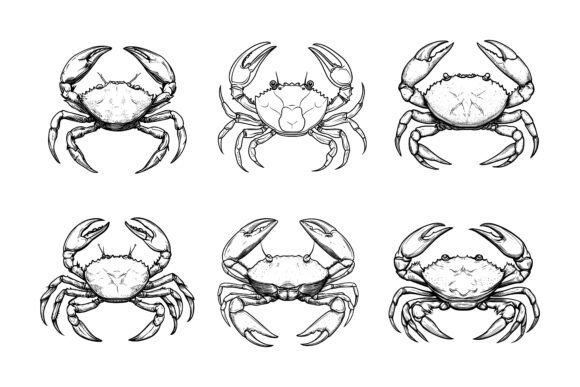
There is something quietly captivating about a well-crafted sea crab silhouette. It carries the weight of the ocean's mystery while remaining visually clean and adaptable. Whether you are designing a seafood restaurant menu, building a coastal brand identity, or adding organic shapes to a digital illustration, this particular form has a way of grounding a composition. The curvature of the claws, the spread of the legs, the subtle tension in the body structure—these details communicate movement and stillness at the same time.
What makes the sea crab silhouette in these AI EPS collections stand out is the attention to structural clarity. The files arrive organized, with separated layers and editable paths that let you isolate individual elements without digging through a tangled mess of anchor points. You get the precision of vector geometry without the frustration of poorly constructed source files.
Why the Sea Crab Silhouette Remains a Versatile Design Asset
Coastal themes cycle through design trends regularly, but crustacean imagery has a staying power that outlasts seasonal shifts. The sea crab silhouette works in contexts that range from rustic seafood shack branding to sleek modern app interfaces. Its bilateral symmetry creates natural balance, and the distinctive claw shapes provide instant recognition even at small sizes.
From a technical standpoint, the silhouette format strips away unnecessary detail while preserving the essential character of the animal. This makes it easier to deploy across varied mediums without worrying about visual noise. When you scale a sea crab silhouette down to favicon size or blow it up for a large-format banner, the integrity of the shape holds. That kind of reliability matters when you are juggling multiple deliverables on a tight timeline.
Practical File Structure and Cross-Platform Compatibility
The included AI and EPS formats give you flexibility across design ecosystems. If you work primarily in Adobe Illustrator on a Mac, the native AI file opens with full editability. The EPS format ensures compatibility with other vector editing software, including CorelDRAW or Affinity Designer on Windows machines. The accompanying JPG serves as a quick reference or a ready-to-use raster version for immediate placement in presentations and mockups.
Layer organization is where many stock illustration sets fall short, but this collection keeps things logical. Grouped elements, clearly named layers, and cleanly separated components mean you can jump straight into customization without spending twenty minutes reverse-engineering someone else's workflow. The file structure reflects an understanding of how working designers actually operate—fast, iterative, and with minimal tolerance for unnecessary complexity.
Editing Flexibility and Color Customization
One of the primary advantages of having a well-structured vector file is the ease of color modification. The sea crab silhouette can shift from a deep navy blue for a nautical brand to a warm terracotta for a Mediterranean-inspired menu design. Because the shapes are constructed with clean paths and proper closed forms, you can apply gradient fills, pattern overlays, or stroke variations without encountering broken geometry.
You are not locked into a single aesthetic interpretation. Maybe you need the crab silhouette to function as a subtle watermark on a website background, reduced to ten percent opacity and tinted to match the surrounding palette. Or perhaps you want a bold, high-contrast version for screen-printed merchandise. The editable nature of the file accommodates both extremes and everything in between.
Real-World Applications Across Industries
The sea crab silhouette finds its way into more projects than you might initially expect. Let's walk through some concrete scenarios where this type of illustration adds genuine value.
Restaurant and Food Service Branding
A seafood restaurant needs visual elements that signal freshness and coastal authenticity without looking like clip art from 1999. The sea crab silhouette, refined and well-proportioned, can anchor a logo, decorate menu headers, or appear as a recurring motif on takeaway packaging. Because the file is vector-based, the same graphic works on a storefront window decal, an embroidered staff apron, and a social media profile icon—all from a single source file.
Print Collateral and Editorial Design
Magazine art directors and book designers often need ornamental elements that break up text without distracting from it. A sea crab silhouette placed subtly in a chapter heading or used as a section divider brings a thematic consistency to cookbooks, travel guides, and marine biology publications. The organized layer structure means you can isolate the body, the claws, or the legs independently, creating partial impressions that suggest the whole without overwhelming the layout.
Digital Products and User Interfaces
App developers and UI designers can incorporate the sea crab silhouette into icon sets, loading animations, or onboarding illustrations. The crisp vector lines translate cleanly to SVG exports for web use. If your application relates to seafood delivery, tide tracking, or coastal tourism, having a recognizable silhouette in the interface helps users form an immediate mental connection to the ocean environment.
Educational and Infographic Content
Teachers, marine educators, and content creators building infographics about coastal ecosystems benefit from anatomical accuracy in their visual references. The sea crab silhouette in this collection maintains proportional integrity, making it suitable for diagrams that label body parts, habitat zones, or species comparisons. The ability to change colors and modify individual segments means you can create clear visual distinctions between different crab types within the same infographic.
Merchandise and Product Design
From t-shirts and tote bags to enamel pins and stickers, the sea crab silhouette translates beautifully to physical products. Screen printers appreciate the solid, uncomplicated shapes that expose cleanly on screens, while laser engravers can use the vector paths directly for etching onto wood, metal, or acrylic. The design's simplicity actually increases its versatility across production methods that have varying levels of detail tolerance.
What Sets a Quality Vector Silhouette Apart
Not all silhouette illustrations are created equal. When evaluating a sea crab silhouette or any nature-inspired vector graphic, several factors determine whether the file will serve you well or cause headaches down the line.
Path cleanliness matters enormously. Well-constructed vector files use minimal anchor points to describe curves, resulting in smoother scaling and easier editing. Bloated paths with hundreds of unnecessary points create jagged edges when scaled up and make color changes tedious.
Proportional accuracy separates professional illustrations from amateur ones. The length of the legs relative to the body, the angle of the claws, the width of the carapace—these details contribute to whether the silhouette reads immediately as a crab or requires a second glance.
Layer organization indicates the illustrator's consideration for the end user. When elements like the left claw, right claw, body, and legs each occupy distinct, labeled layers, customization becomes straightforward. You can experiment with asymmetrical color treatments or remove certain components entirely without disturbing the rest of the artwork.
Integrating the Sea Crab Silhouette Into Your Workflow
Once you have the files, the practical steps for implementation are straightforward but worth spelling out. Start by opening the AI or EPS file in your vector editor of choice. Duplicate the artboard before making any changes so you always have the original as a reference point. Select individual elements from the layers panel rather than clicking directly on the canvas to avoid accidental shifts.
If you need to combine the sea crab silhouette with typography, consider how the shape's natural lines interact with your letterforms. The upward curve of the claws can echo the arc of a headline set in a script typeface, while the horizontal spread of the legs might align with a strong sans-serif wordmark underneath. These compositional relationships are subtle, but they contribute to whether a layout feels cohesive or disjointed.
For web use, export the sea crab silhouette as an SVG with appropriate optimization settings. For print, confirm that your color values match the intended output profile—CMYK for offset printing, Pantone for spot color jobs, or RGB for digital displays. The JPG included in the file package gives you a quick preview option for client presentations or internal reviews where full vector editing is not required.
Making the Most of a Small but Mighty Design Element
It is easy to overlook the value of a single, focused illustration when the market floods you with massive bundle deals and sprawling icon sets. However, there is genuine efficiency in working with a purpose-built graphic that does one thing exceptionally well. The sea crab silhouette does not try to be everything—it simply provides a clean, editable, well-organized shape that you can transform to fit your specific context.
Consider keeping a folder of these kinds of specialized vector assets, organized by category, so you can reach for them when a project calls for a particular visual note. The time saved by not having to draw a sea crab silhouette from scratch—or worse, settling for a low-quality free download that falls apart upon inspection—adds up across multiple projects.
Whether you are assembling a brand identity package, putting together an educational resource, or crafting digital content that needs a touch of organic form, this illustration delivers exactly what it promises without unnecessary complexity. You open the file, you edit what you need, and you move on to the next task. That straightforward workflow is what many of us are actually looking for.