Hold One’s Hands Continuous Line: The Silent Power of a Single Stroke
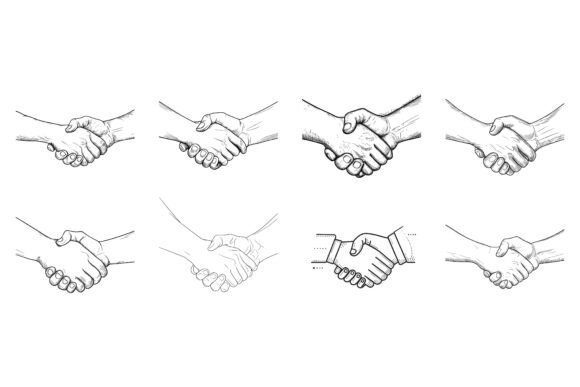
There are few visual concepts as universally understood as the image of two hands holding one another. When that image is stripped down to a continuous, unbroken line, something remarkable happens. The connection becomes more immediate, the emotional weight more intimate. Hold one’s hands continuous line art is far more than a minimalist design trend. It speaks a visual language that human eyes and minds decode in fractions of a second—unity, support, collaboration, empathy. For designers, brand strategists, and content creators, this singular motif has quietly become one of the most adaptable and emotionally resonant devices in the modern visual toolkit.
This article explores the deeper relevance of the continuous line holding hands motif, how it fits into shifting tastes and professional workflows, and why having access to a carefully crafted, professionally structured illustration set—like the special AI EPS collections we are highlighting—transforms a simple idea into a reliable creative resource. We will look beyond the surface appeal and into the practical value that such a collection brings to everyday work across platforms, devices, and industries.
Why a Continuous Line Holds Attention in a Fragmented Visual World
The current digital environment is loud. Stock photos, complex 3D renders, and busy infographics fight for a user's gaze. In this climate, a drawing composed of one single, flowing stroke acts as a visual exhale. The hold one’s hands continuous line approach removes distraction. It does not shout; it suggests. This restraint often creates stronger engagement because the viewer’s mind completes the image, filling in the warmth and the connection. Psychologically, the brain processes this kind of clean silhouette faster and retains it longer, which is why continuous line art performs exceptionally well on mobile screens, app interfaces, and fleeting social media feeds.
User expectations have evolved. Audiences now favor authenticity signals over polished artificiality. A continuous line illustration suggests handcrafted honesty, a human touch in a space of automated, overproduced graphics. For organizations trying to communicate real empathy—whether in healthcare, counseling, nonprofit outreach, or inclusive branding—this style is not just decorative. It is strategic. It conveys that the message is personal, not mass-manufactured.
The Evolution of Hand-Holding Imagery in Design and Communication
Decades ago, representations of holding hands gravitated toward literal, shaded drawings or photographic realism. They were used in greeting cards, charity posters, and occasionally corporate social responsibility reports. Over time, the demand for scalable, culturally neutral, and gender-neutral icons pushed the design world toward abstraction. The contour of two interlocked hands distilled to its essential geometry became a perfect solution. It honors the gesture without prescribing age, skin tone, or identity. This inclusive quality is one reason why the continuous line version has gained so much traction.
Another factor is the rise of platforms that prize iconography and symbolic micro-content. Web applications, onboarding screens, chatbots, wellness apps, and educational tools all rely on empathetic visual cues that do not overwhelm the UI. The continuous holding hands line fits seamlessly into those environments. It carries emotional meaning while occupying minimal visual weight. That dual function—deep meaning plus practical simplicity—is rare and valuable.
How a Special AI EPS Collection Elevates the Creative Process
Having a great idea is one thing. Executing it reliably across formats and platforms is another. This is where a thoughtfully organized vector illustration set makes a measurable difference. The special AI EPS collection we are discussing was not assembled randomly. It was built to answer a real need: designers want artwork that is crisply structured, infinitely editable, and ready for both digital and print workflows. The file includes AI, EPS, and high-resolution JPG formats, and it is designed to function on Mac and Windows right from the download. There is no conversion hassle, no scrambled layers.
When a designer opens a file and finds a neat layer structure, they can immediately separate, recolor, resize, or adjust the hands illustration without untangling grouped paths for an hour. That forensic attention to organization—the neat file architecture—saves billable time and mental energy. Professionals who need to move fast while maintaining precise visual quality recognize the value of a file that respects their workflow, not one that fights it.
Practical Implications for Modern Professionals and Creators
This continuous line holding hands artwork has applications far beyond what a casual observer might imagine. Consider a few concrete examples:
- Web and app UI design: Used as a onboarding illustration, a community icon, or an empty state graphic, the single-line motif communicates support without clutter. Its minimalism aligns with contemporary interface trends that emphasize clarity.
- Presentation and pitch decks: Entrepreneurs and marketers often need to symbolize partnership, mentorship, or teamwork. A delicate hand-holding line drawing on a slide can anchor an entire narrative about trust or collaboration. Because the AI EPS file allows simple color changes, the illustration can be tinted to match brand palettes in seconds.
- Print collateral and signage: The same vector file scales to posters, brochures, event banners, and even large-format displays. Since the artwork is built with perfection in details and consistency, it retains its elegance at any size. The included JPG gives a quick-access option for non-designers who need a ready-to-use image.
- Infographics and data storytelling: Data can feel cold. A single empathetic visual anchoring a report changes how the information is received. The holding hands line becomes a symbol woven into charts, placing human connection at the center of the data story.
- Symbols, icons, and brand systems: A brand might adopt a continuous line motif as part of its visual language. With a well-structured source file, designers can derive multiple icon variants while keeping the core feel intact. This consistency across a brand’s touchpoints is what builds recognition.
In each of these scenarios, one thing is constant: the ability to edit and adapt the illustration easily is not a luxury; it is a necessity. A static, locked graphic would fail in most modern contexts. The flexible AI EPS collection answers the demand for modification without degradation. You can change colors, adjust line weight, isolate elements, and even animate segments in motion graphics. That control puts the creative decision back in the hands of the user.
Why Attention to File Structure and Detail Matters More Than Ever
Many illustration files are sold with a great preview image and a tangled mess underneath. The frustration is real for anyone who has spent an afternoon deciphering unnamed layers or compounded clipping masks. The promise of neatly organized file and layer structure is not a small footnote; it is a productivity multiplier. When every element lives on a clearly labeled layer, a graphic can be integrated into a website prototype or a mobile app mockup in minutes rather than hours. This operational smoothness is what separates a truly usable resource from a decorative afterthought.
Additionally, the perfection in details and consistency mentioned in the set’s description translates to careful handling of curves, consistent line thickness, and endings that join gracefully. A flawed continuous line drawing betrays itself quickly—awkward transitions or breaks undermine the illusion of flow. High-quality vector work ensures that the holding hands gesture reads cleanly at any size and in any context, from a tiny favicon to a gallery wall print. This is not about flashy tricks; it is about old-fashioned craftsmanship applied to a digital medium.
Blending Human Emotion with Technical Flexibility
The intersection of emotional design and technical adaptability is where the real value of this illustration lives. Businesses are increasingly aware that empathetic visual communication directly impacts trust and conversion. A wellness app that greets new users with a soft continuous line of two hands signals that this space is safe and supportive. A financial tool that uses the same symbol to represent joint accounts or family planning introduces humanity into a number-heavy interface. The context can shift, but the core resonance remains.
This is why the AI EPS collection is designed for cross-functional use: suitable for print, web, symbols, apps, and infographics. It moves with the project. A graphic designer can pull the file into Adobe Illustrator on a Mac, recolor it for a brand’s accent blue, and export it for a landing page. A marketing coordinator on a Windows machine can open the same AI file, convert it for a printed flyer, and save a JPG for an email newsletter. The illustration does not lock anyone into a single outcome. That versatility is exactly what modern workflows demand.
Observations from a Changing Creative Landscape
The steady shift toward accessible, editable design assets is not slowing down. Small business owners, solopreneurs, and content creators now regularly use vector illustrations alongside professional design studios. The barrier has lowered, but the expectation for quality has not. A collection that includes a high-resolution JPG alongside editable AI and EPS files bridges the gap between the DIY creator and the expert. Someone with minimal design software can still use the JPG effectively, while the advanced user can dive deep into customization. This dual-readiness is a quiet but powerful advantage.
There is also a growing appreciation for illustration styles that do not age quickly. Hyper-trendy gradients or specific illustration fads can look dated in eighteen months. The continuous line hand-holding drawing, however, belongs to a more enduring tradition. It carries a timelessness that makes it a safe long-term addition to a brand kit or a design asset library. The investment feels sensible rather than impulsive.
Real-World Scenarios Where This Illustration Delivers Immediate Impact
Imagine a nonprofit organization preparing a campaign for mental health awareness. They need a central image that can live on their website, in social posts, on printed brochures, and in a donation platform UI. The holding hands continuous line illustration provides that anchor. Because the source file is meticulously organized, the team’s designer can adapt the color to match the campaign’s teal palette, create a simplified version for the app icon, and a more detailed version for the print banner—all from a single purchase. The cost and time savings stack up quickly, but more importantly, the message feels unified and intentional across every channel.
Or picture a freelance educator assembling an online course about partnership and communication. They want slides that feel warm but not amateurish. Dropping in the line art, tinted softly, gives every slide a consistent visual thread. There is no need to commission a custom illustration or navigate complex licensing. The instant editability allows the educator to experiment until the tone feels right. That kind of creative freedom, backed by a well-built file, transforms a simple graphic into a teaching aid with genuine presence.
The Broader Relevance of Holding Hands in a Digitally Connected Society
Amid hybrid work, virtual communities, and globally distributed teams, the act of physically holding hands has become a powerful metaphor for connection across distance. Visual representations of that act are used in team collaboration tools, remote onboarding emails, and community platforms. The continuous line style, with its emphasis on flow and connection, mirrors the idea of networks and interdependence without needing a complex diagram. It is a subtle reminder that behind every screen, there is a human hand reaching out. This cultural resonance is not accidental; it is precisely why the motif has seen a quiet resurgence in sectors ranging from health tech to ethical e-commerce.
People are paying more attention to the emotional texture of the images they consume and share. Users can spot a generic, impersonal graphic in a heartbeat. The hand-drawn feel of a continuous line—especially one executed with clean precision—satisfies the desire for authenticity without sacrificing professionalism. It works because it feels made by humans for humans, even when it arrives as a perfectly scalable vector file.
The special AI EPS collection we have been discussing captures all of these qualities and packages them in a way that respects your time and your creative judgment. It is not a collection of isolated, disconnected images; it is a cohesive illustration solution built around a single, powerful gesture. The inclusion of multiple file formats, the cross-platform compatibility, and the deliberate organization speak to an understanding of how people actually work today. When you can edit it, change colors, and modify the icon so easily according to your needs, the artwork becomes a starting point for unlimited expression, not a static endpoint.
In a visual economy that rewards clarity, empathy, and adaptability, the simple act of two hands connected by one continuous line does more than decorate. It communicates what many paragraphs cannot. Having that asset, ready to use and built to fit into any project, means spending less time searching and more time creating work that connects. That is the core reason why such an illustration set matters—not because it follows a trend, but because it fulfills a genuine, ongoing need for design that feels human, works seamlessly, and never gets in the way.