Bee Silhouette Simple Vector Illustration: A Practical Design Resource Evaluation
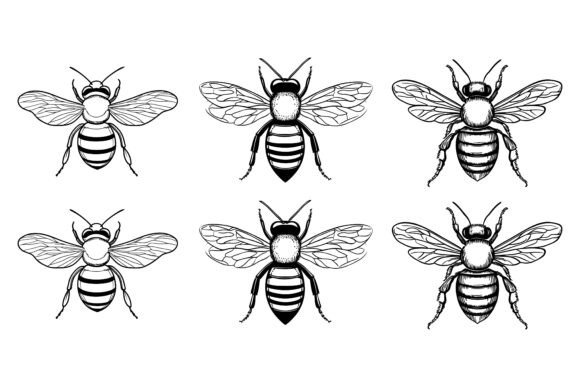
A bee silhouette simple vector illustration is a clean, minimal outline drawing of a bee, created as scalable vector artwork. Typically delivered in industry-standard formats like AI (Adobe Illustrator) and EPS (Encapsulated PostScript), along with a high-resolution JPG preview, these assets are crafted for maximum versatility. The concept behind such a collection is straightforward: provide a crisp, recognizable bee shape that can be dropped into dozens of project types without heavy manipulation, while keeping the file lightweight and easy to customize. But beyond the basic description, what really matters is whether this type of resource aligns with the work you do every day. This evaluation looks at the practical value, tradeoffs, and decision-making factors surrounding bee silhouette vector sets.
What a Bee Silhouette Simple Vector Illustration Really Offers
At its core, a simple vector silhouette strips away complexity to leave only the essential outline. For a bee, that means recognizable wings, antennae, and the characteristic body segments—all conveyed through negative space or a single solid shape. Unlike a fully detailed illustration, there are no gradients, textures, or internal linework unless you add them. The file package often includes an AI source file with neatly organized layers, an EPS for broad compatibility across different software, and a JPG for quick placement or reference. Because the file structure is typically well-organized, changing the silhouette’s color, scaling it to billboard size, or breaking it apart into individual components becomes a straightforward task for anyone comfortable with basic vector editing.
What sets a well-prepared set apart is how it handles the small details: consistent curves, smooth anchor points, and a structure that makes sense when you open the file. For Mac and Windows users alike, the cross-platform nature of EPS and AI ensures the artwork doesn't break when moved between operating systems. The description often emphasizes "perfection in details and consistency," and in practice this means you won’t find wobbly lines, uneven wing spacing, or odd artifacts when you zoom in—qualities that save real production time.
Why Designers and Content Creators Seek Out This Kind of Asset
The appeal of a bee silhouette simple vector illustration goes far beyond looking pleasant. Many projects demand a symbol that is instantly understood, works at tiny sizes, and doesn't compete with other visual elements. Here are some of the most common scenarios where the resource finds a natural home, and why it becomes a go-to solution.
Scalability Without Quality Loss
Because the artwork is vector-based, you can use it as a small app icon one day and as a large exhibition banner the next, without ever worrying about pixelation. This alone makes the illustration suitable for a broad range of media—print, web, symbols, apps, and infographics—all listed in typical product descriptions. The promise of "suitable for print and web" holds true precisely because the mathematical paths remain sharp at any resolution.
Rapid Customization and Brand Alignment
One of the strongest practical advantages is how easily you can edit the silhouette to match a brand’s palette or a project’s mood. A black outline can turn into a honey-gold fill, a soft watercolor style with added opacity, or even a glowing neon accent. Because the file is organized in clearly labeled layers, you avoid the frustration of hunting through nested groups. The ability to "change colors and modify the icon so easily according to your needs" directly translates to faster turnaround when deadlines are tight. For a small business, a nonprofit conservation group, or an educator building a presentation, this flexibility means one purchase can serve multiple campaigns without starting from scratch.
Consistency Across a Series
When you need multiple nature-themed icons that feel cohesive, a single bee silhouette often belongs to a larger family of insects or botanical symbols. The clean, uniform style helps maintain visual harmony across an infographic, a website, or a set of educational flashcards. Attention to consistent line weight and geometric balance—hallmarks of a well-made set—ensures the bee doesn't look out of place next to a butterfly or a leaf icon from the same collection.
Tradeoffs and Limitations Worth Considering
No design resource is a universal fit. A bee silhouette simple vector illustration excels in many contexts, but it also comes with boundaries that are important to recognize before you commit. Being aware of these tradeoffs will help you make a more informed decision.
Minimal Detail May Not Convey Nuance
A silhouette intentionally omits internal details such as wing veins, fuzz texture, or compound eyes. If your project requires a realistic, scientifically accurate depiction of a honeybee for a biology textbook or a documentary, a simple outline might feel too reductive. In such cases, an alternative like a detailed hand-drawn illustration or a high-quality photograph would communicate the necessary information more effectively. The silhouette works for universal recognition, but not for educational depth or emotional realism.
Generic Appeal Can Blend Into the Background
Popular subject matter like bees means many designers already have a similar asset in their toolkit. While the silhouette itself is classic, a very common shape may not help your project stand out if uniqueness is a priority. If you are building a brand identity that needs to feel distinctive and ownable, consider whether you can significantly customize the silhouette—perhaps by combining it with type, incorporating it into a larger logo mark, or altering the pose. Otherwise, a custom-drawn bee graphic might be a better long-term investment.
Editing Comfort Is Assumed
Although the set is designed for easy editing, that ease still assumes you have some familiarity with vector editing software like Adobe Illustrator, Affinity Designer, or Inkscape. For a complete beginner, opening an AI or EPS file and changing colors may involve a learning curve. The files are neatly organized and documented, but the user still needs to understand layers, fills, and strokes. If your workflow relies entirely on raster-based tools or simple online editors, you may not fully unlock the vector file’s potential—and in such a situation, a high-resolution PNG pack might serve you just as well with less complexity.
Where the Silhouette Becomes the Ideal Choice
Understanding the strengths helps you match the resource to the task. Based on the typical feature set—AI, EPS, JPG formats, cross-platform compatibility, layer structure, and print-web suitability—here are the situations where this illustration set consistently delivers the most value:
- App and web UI icons: Navigation menus, buttons, and status indicators rely on simple, crisply legible symbols. A bee silhouette works perfectly for sustainability trackers, gardening apps, or honey product platforms.
- Infographics and data visualizations: Clean vector outlines can be scaled, colored, and repeated to represent statistics about bee populations, pollination, or environmental trends without overwhelming the data.
- Printed stationery and packaging: Small bee motifs on business cards, honey jar labels, or eco-friendly product packaging need the sharpness that only vector art can deliver at small sizes.
- Cutting and crafting templates: If you use a Cricut, Silhouette machine, or laser cutter, the simple outline translates beautifully into a cut file with minimal cleanup.
- Educational materials: Worksheets, flashcards, and classroom posters benefit from clear, distraction-free artwork that children can easily identify.
In each of these cases, the core promise of "perfection in details and consistency" holds immediate practical meaning: you won’t spend hours fixing poorly traced lines before you can use the graphic.
When It Makes Sense to Explore Alternatives
Evaluating a resource honestly means acknowledging when it might not be the best tool for the job. Consider alternatives if your project falls into one of the following areas.
- High-detail editorial or scientific work: A silhouette lacks the intricate detail needed for a field guide or a nature magazine feature. A photograph, a 3D model, or a highly rendered illustration would serve better.
- Brand identity that demands originality: If you are creating a logo for a beekeeping business, a stock silhouette—even a well-crafted one—can appear too generic when trademarking is a consideration. Commissioning a custom designer to create a unique posture or incorporate specific details may be a wiser route.
- Projects needing complex colorwork or shading: While you can add colors and gradients, a flat silhouette might require significant reworking to achieve a realistic, three-dimensional look. In that scenario, a pre-shaded vector illustration or a photo composite might save more time.
- Teams without vector editing software: If your entire team works exclusively in Canva, PowerPoint, or mobile apps, a JPG or PNG pack could be more immediately usable than AI and EPS files, despite the loss of scalability benefits.
Practical Questions to Guide Your Decision
Before adding a bee silhouette simple vector illustration to your resource library, pause and assess your actual needs. Ask yourself:
- Will this graphic be used across vastly different sizes and mediums? If yes, the vector format delivers clear advantages over raster alternatives.
- Do I need a symbol that communicates "bee" instantly, without additional context? A silhouette excels at rapid visual recognition.
- Am I comfortable working with AI or EPS files, or do I have a colleague who is? If your workflow doesn’t support these formats, the extra step of conversion may cause friction.
- How important is uniqueness? Can I sufficiently customize the graphic to make it feel bespoke? If the answer is no, consider the tradeoff between cost and distinctiveness.
- Does the set include the specific file types and organization I need? Check whether JPG previews, well-named layers, and cross-platform compatibility are explicitly mentioned. These details often separate a production-ready asset from one that requires cleanup.
Reflecting on these questions shifts the focus away from impulse buying and toward a strategic resource selection.
Integrating the Illustration Into Your Workflow
Suppose you determine that a simple bee silhouette vector fits your goals. How can you extract maximum value? Start by exploring the layer structure. Reputable sets separate elements logically—one layer for wings, another for the body, perhaps a separate antennae group—so you can recolor or rearrange without affecting the whole shape. Experiment with stroke thickness adjustments to match your brand’s visual weight. Since many such sets are designed with both Mac and Windows users in mind, you can typically open the EPS in a wide range of programs, from CorelDRAW to free tools like Inkscape. If you plan to use the illustration primarily on the web, export it from the AI or EPS master file as an SVG to maintain the vector crispness in browsers.
One overlooked strength is the ability to use the silhouette as a clipping mask or negative-space element. Fill it with a photo of honeycomb, wildflowers, or sky, and you instantly have a more dynamic composition while retaining the simple outline. This technique works well for social media posts, presentation slides, and poster designs, giving you visual variety from a single source file.
Balancing Simplicity and Creative Potential
A bee silhouette simple vector illustration embodies a design philosophy where less is more, but that doesn't mean the result has to be boring. The structured file, perfect curves, and layer-based organization put creative control in your hands. You are not locked into a static image; you are given a flexible starting point. For many designers, marketers, educators, and small business owners, that blend of simplicity and adaptability justifies the resource’s place in a toolkit. For others, the very simplicity is the limitation—and recognizing that early prevents wasted effort.
Ultimately, the decision rests on matching the clear-cut strengths of the asset to the nuanced demands of your project. When the fit is right, the bee silhouette becomes a quiet workhorse that elevates design without calling unnecessary attention to itself. When the fit isn’t right, acknowledging that gap leads you to the alternative that will truly carry the project forward. Keeping that balance in mind makes all the difference.